Library › 2. Stances (Dachi)
The stances (Tachi-Waza, stance technique) are designed so that they can be held for a long time. The legs are generally straight, but the knees are not locked. The upper body is upright. The stances should allow a quick change into a fighting stance.
Overview
- Heisoku-Dachi (閉足立ち)
- Musubi-Dachi (結び立ち)
- Heikō-Dachi (平行立ち)
- Zenkutsu-Dachi (前屈立ち)
- Shiko-Dachi (四股立ち)
- Kiba-Dachi (騎馬立ち)
- Sanchin-Dachi (三戦立ち)
- Neko-Ashi-Dachi (猫足立ち)
- Kosa-Dachi (交差立ち)
- Hebi-Dachi (蛇立ち)
- Hakutsuru-Dachi (白鶴立ち)
- Other stances
Heisoku-Dachi (閉足立ち) – closed parallel stance
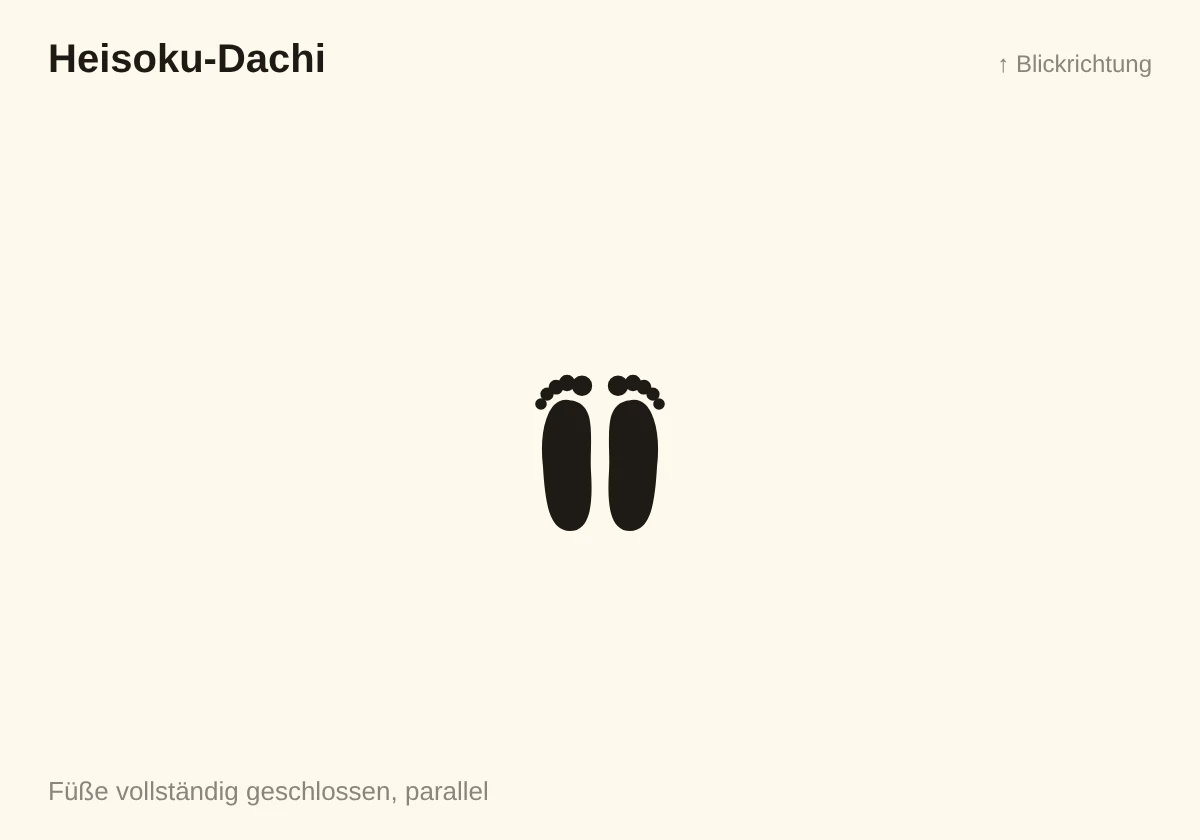
The feet are completely closed. The arms lie close to the body. The “Yoi!” stance.
Musubi-Dachi (結び立ち) – joined stance
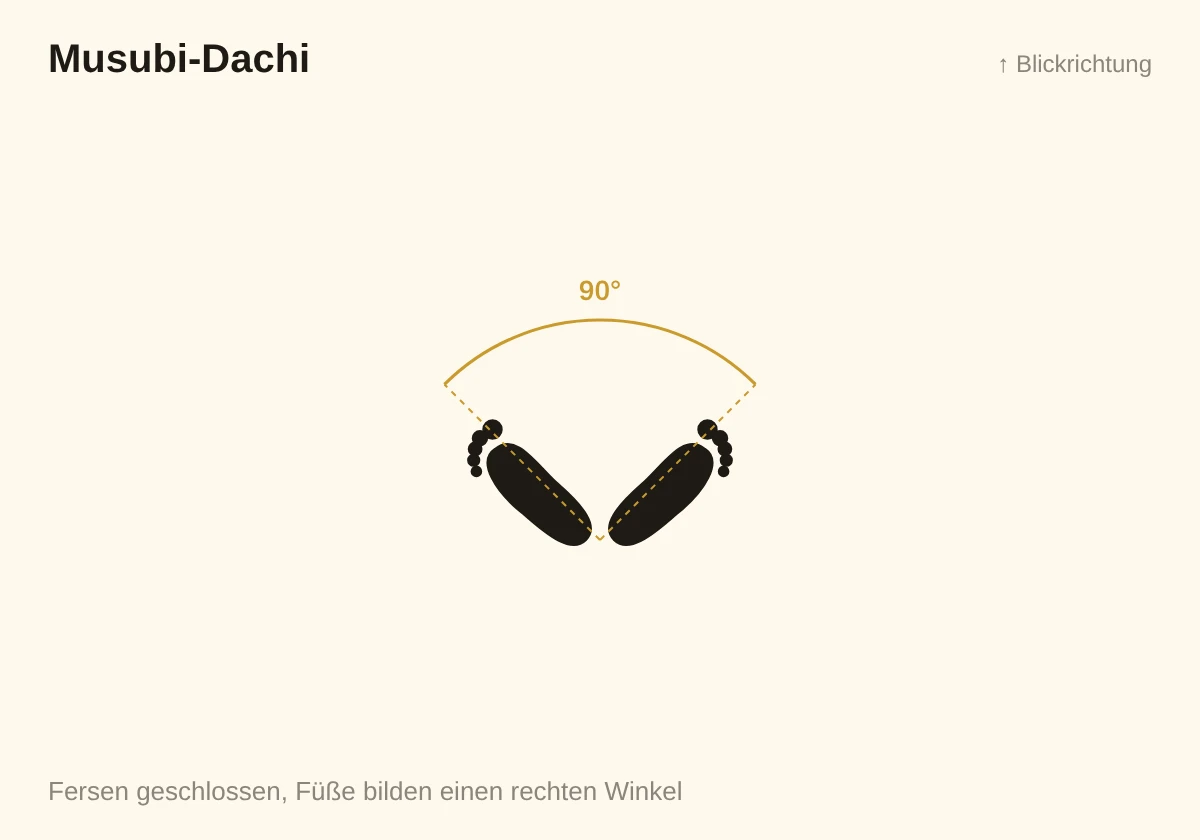
The feet form a right angle. The arms lie close to the body, the hands are open. The bow (Rei) is performed in this stance.
Heikō-Dachi (平行立ち) – open parallel stance
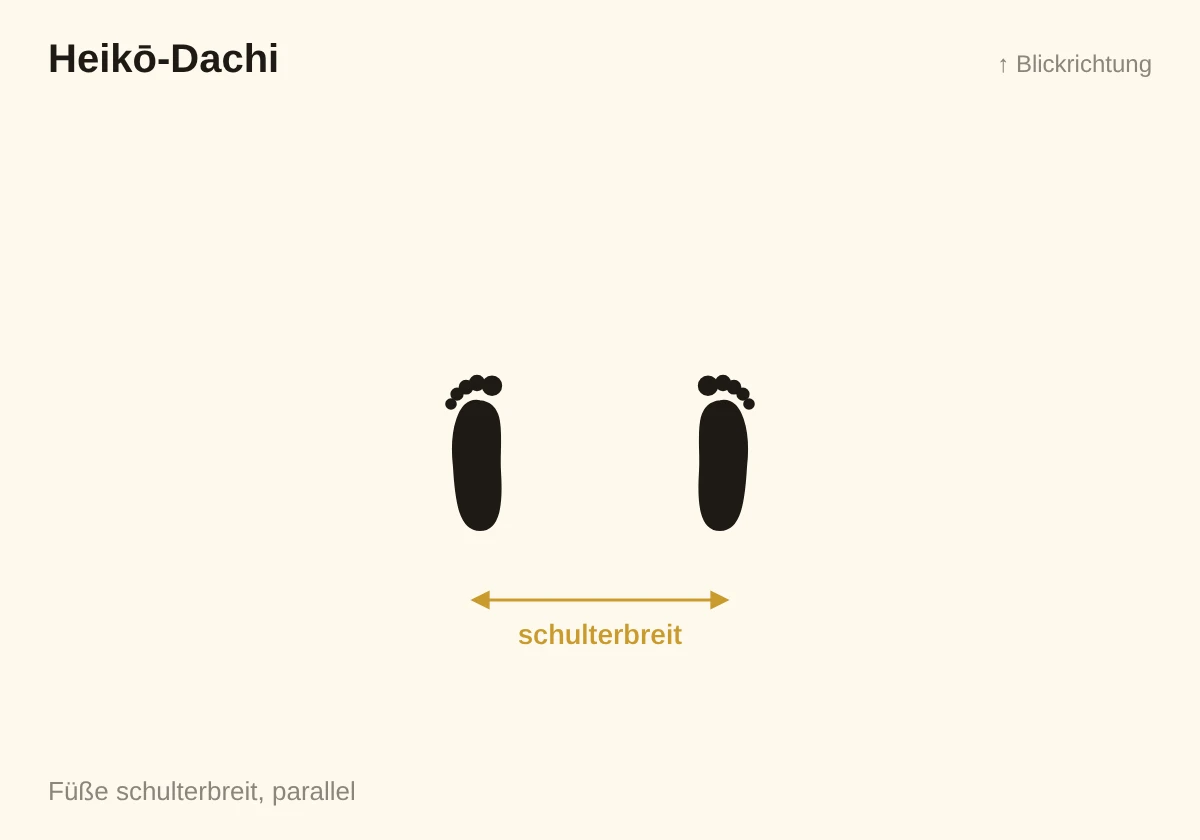
The feet stand side by side, shoulder-width apart. The arms are held extended in front of the body.
Shizentai (basic stance) literally means “natural body posture”.
Zenkutsu-Dachi (前屈立ち) – forward stance
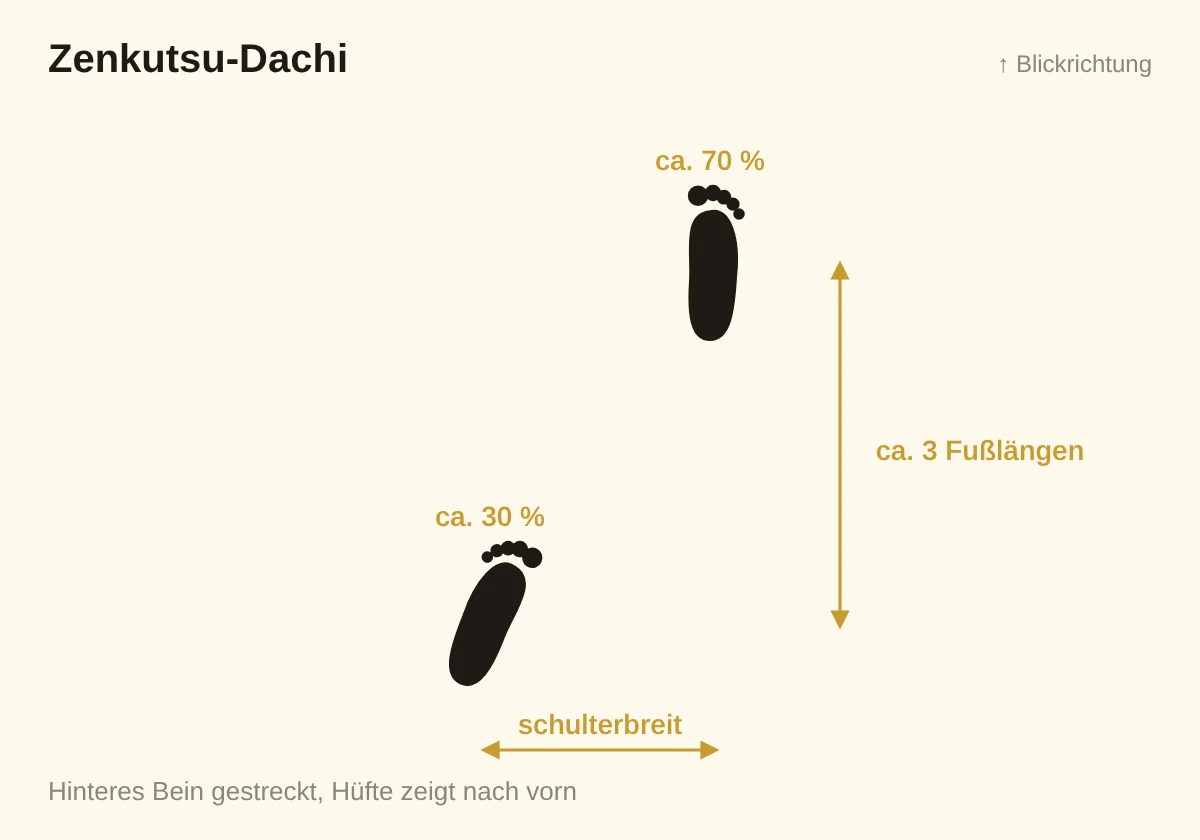
The feet are shoulder-width apart. The rear foot is drawn back about 3 foot-lengths, so that the rear leg is straight. Around 70 % of the body weight should rest on the front leg. When stepping in this stance, the feet move past the standing foot in an elliptical path. The hips face straight ahead in the direction of the gaze.
Shiko-Dachi (四股立ち) – square stance
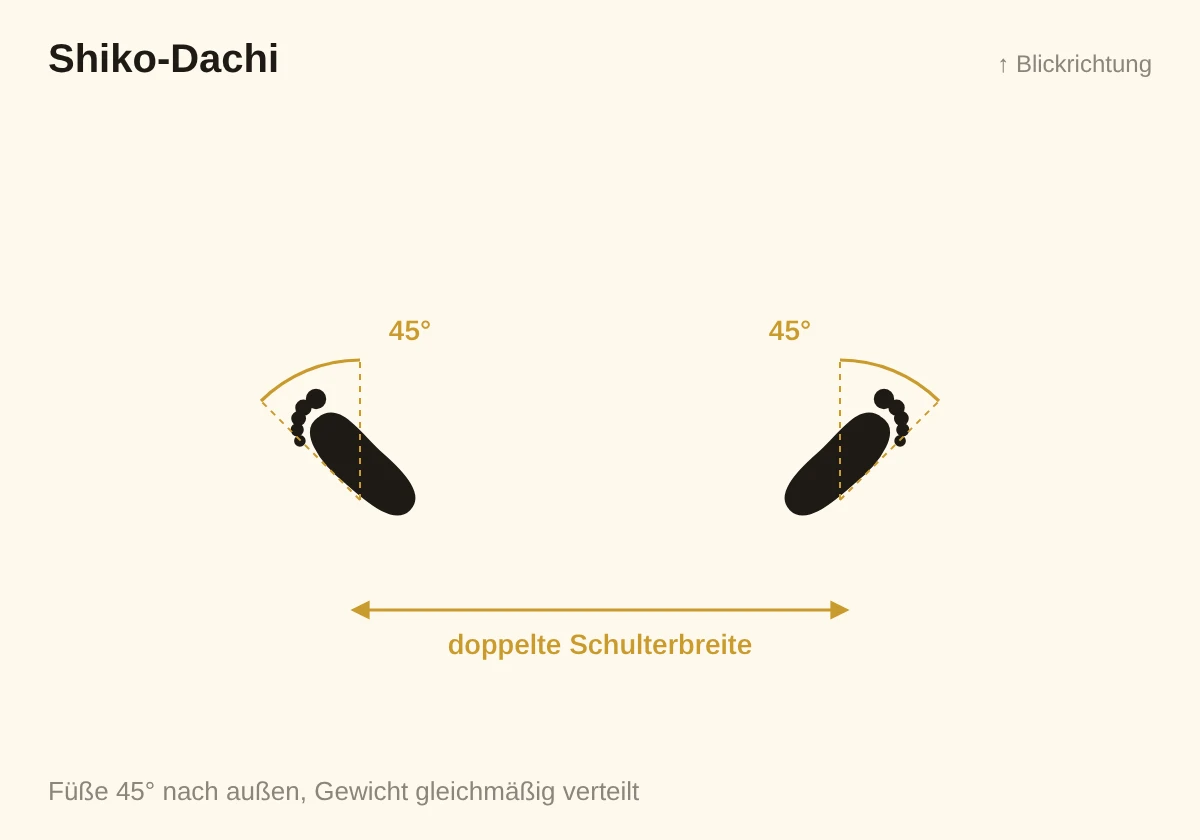
The feet stand side by side at double shoulder width. The feet are turned out 45°. The stance is wide-legged, deep and open. Ideally, the legs form a rectangle. The weight is evenly distributed on both legs. Figuratively, the tangents of the outer edges of the feet form a right angle just behind the shoulder.
Kiba-Dachi (騎馬立ち) – horse-riding stance
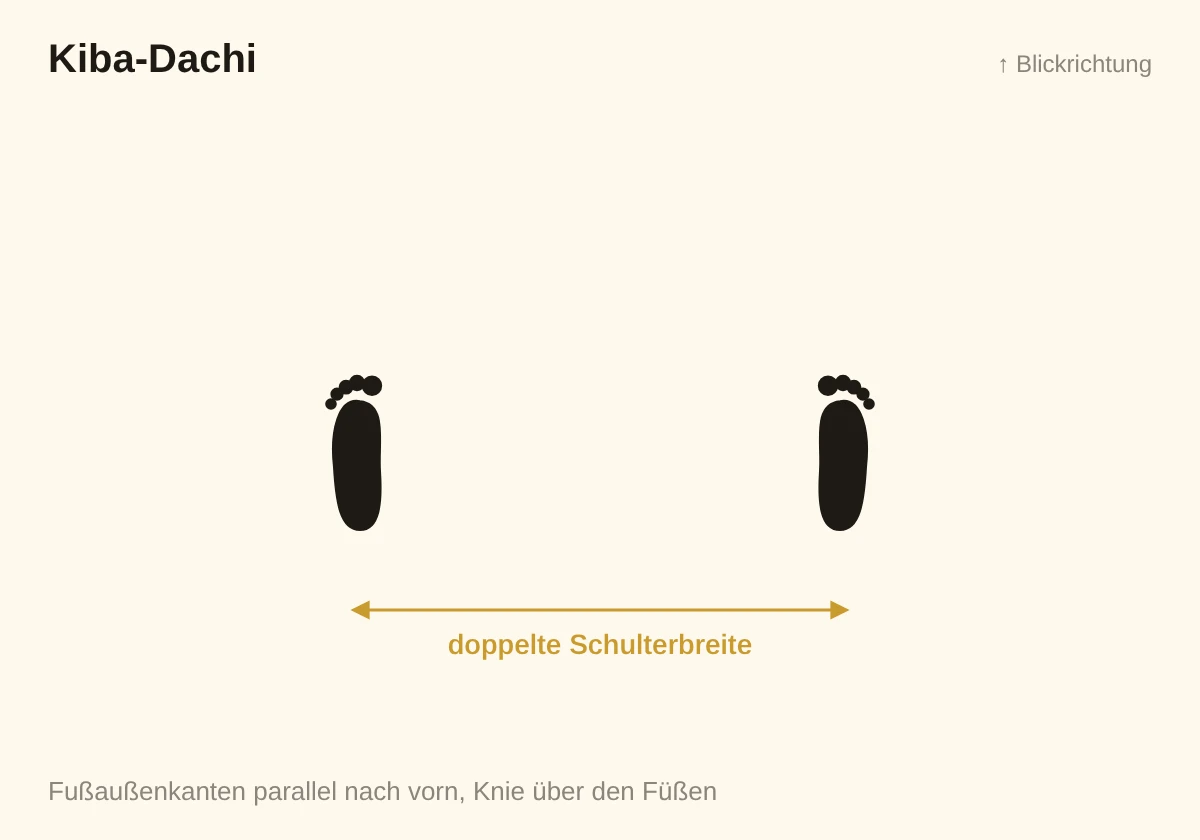
This stance owes its name to the character for cavalry. The feet stand side by side at double shoulder width. The outer edges of the feet point forward in parallel and the knees are directly above the feet. The hips are exactly in the middle. Important is the inner tension in the thighs, so that they draw the hips in.
Sanchin-Dachi (三戦立ち) – three-battles stance
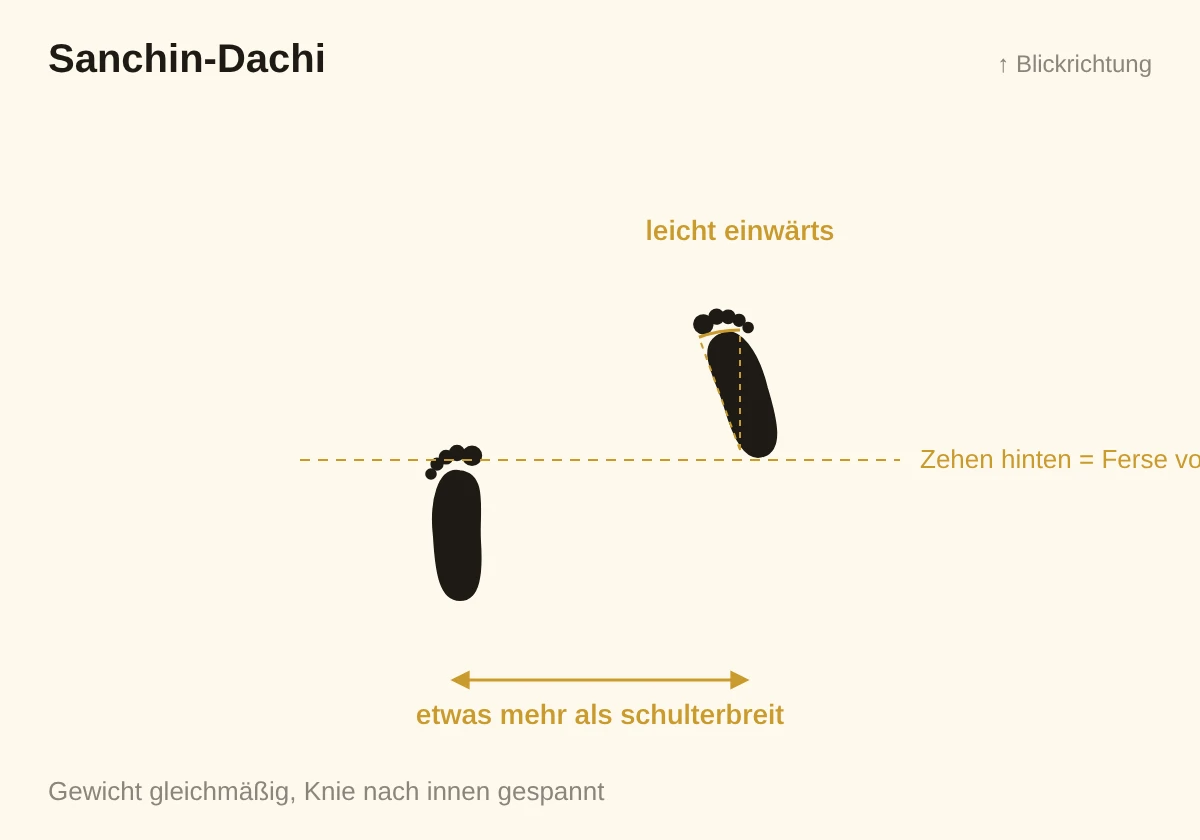
The feet are slightly more than shoulder-width apart and one foot-length one behind the other, so that the toes of the rear foot and the heel of the front foot are level. The rear foot points straight ahead, the front foot is turned slightly inward. The weight is evenly distributed on both feet. Unlike in most other stances, the bent knees are turned inward and tensed. They must not be turned in too far, though, or stability suffers and the knees become easy targets.
Neko-Ashi-Dachi (猫足立ち) – cat stance
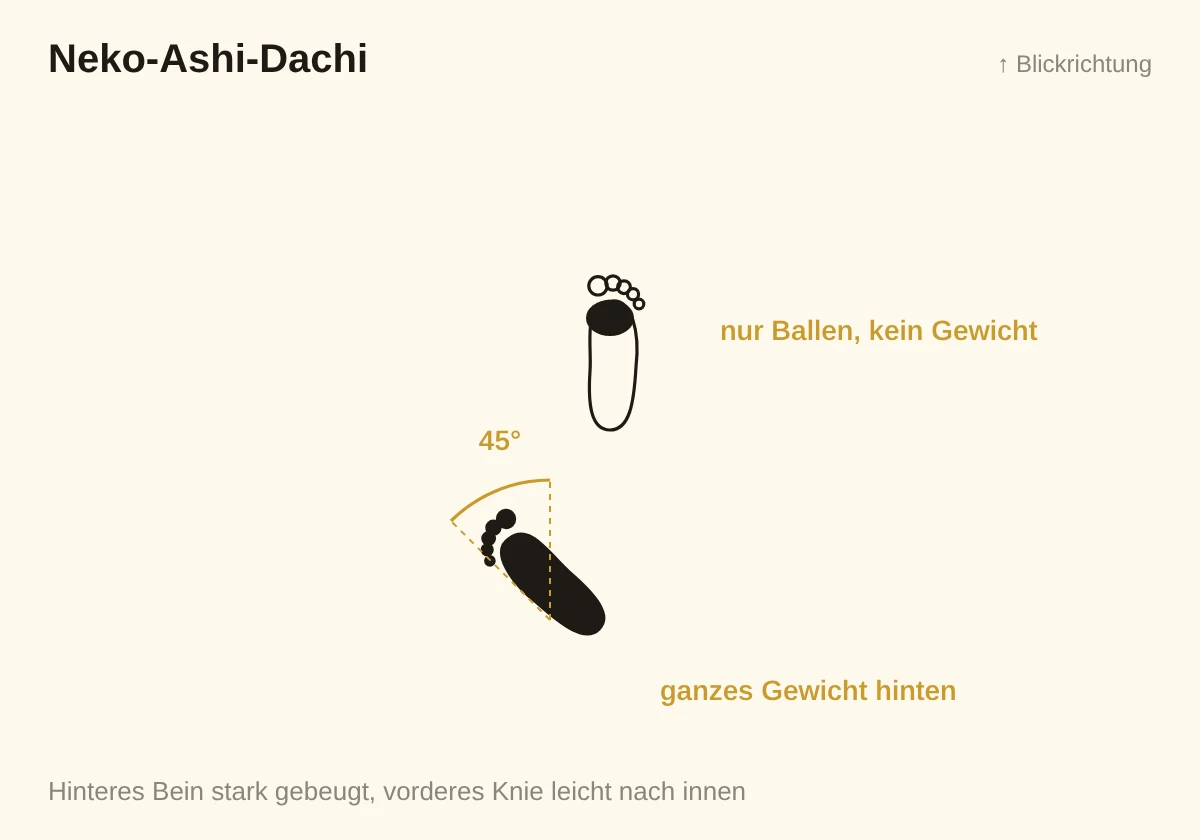
This stance gets its name from resembling a cat just before it pounces. All the weight rests on the rear leg, which is deeply bent and turned out 45°. The front foot touches the floor only with the ball, without taking any weight. The front knee tilts slightly inward. This stance is very flexible and allows quick movement in any direction.
Kosa-Dachi (交差立ち) – cross stance
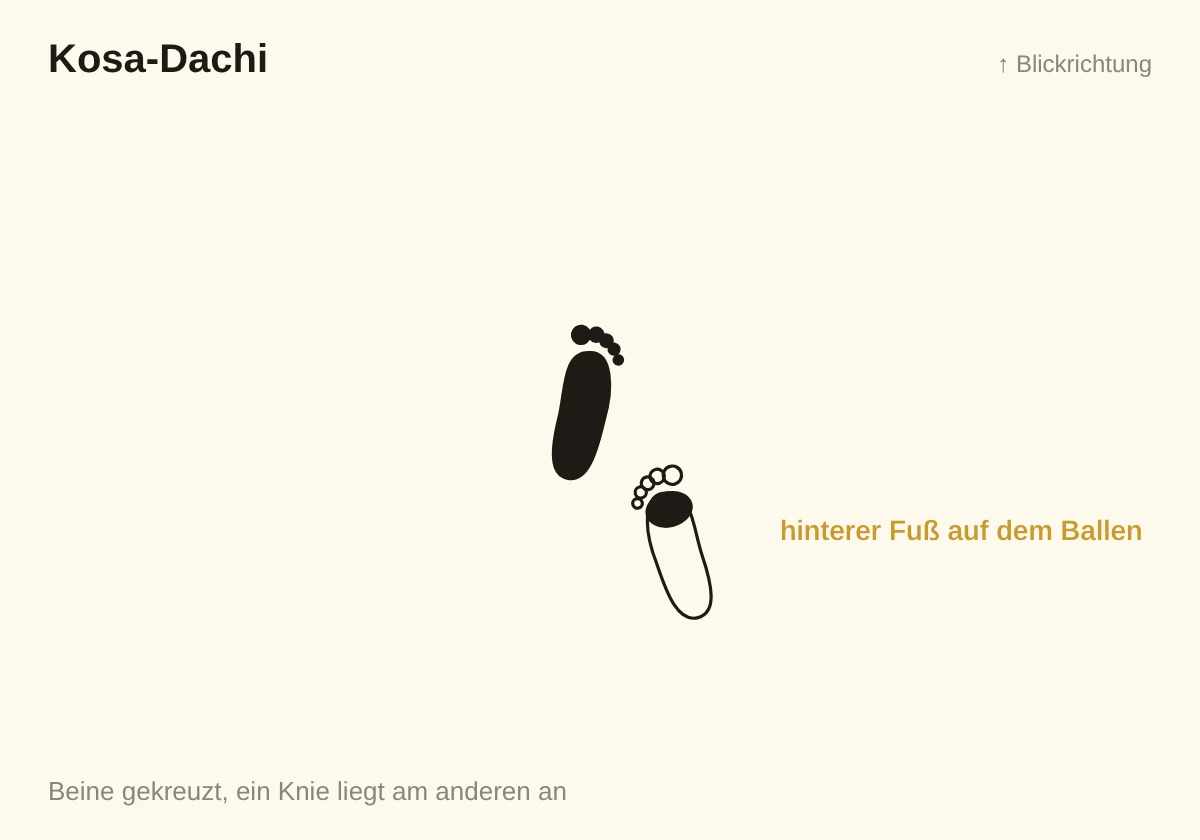
Here one knee is tucked directly into the other. In karate it developed from Hebi-Dachi (snake stance). The snake stance is still taught in Kung Fu today – and at Ōkami.
Hebi-Dachi (蛇立ち) – snake stance
The snake stance is the basic form contained in Kosa-Dachi: the legs are crossed and the body sinks low. In Kung Fu it is still taught as a stance of its own. At Ōkami Dō it is trained as well, for flexibility at depth.
Hakutsuru-Dachi (白鶴立ち) – crane stance
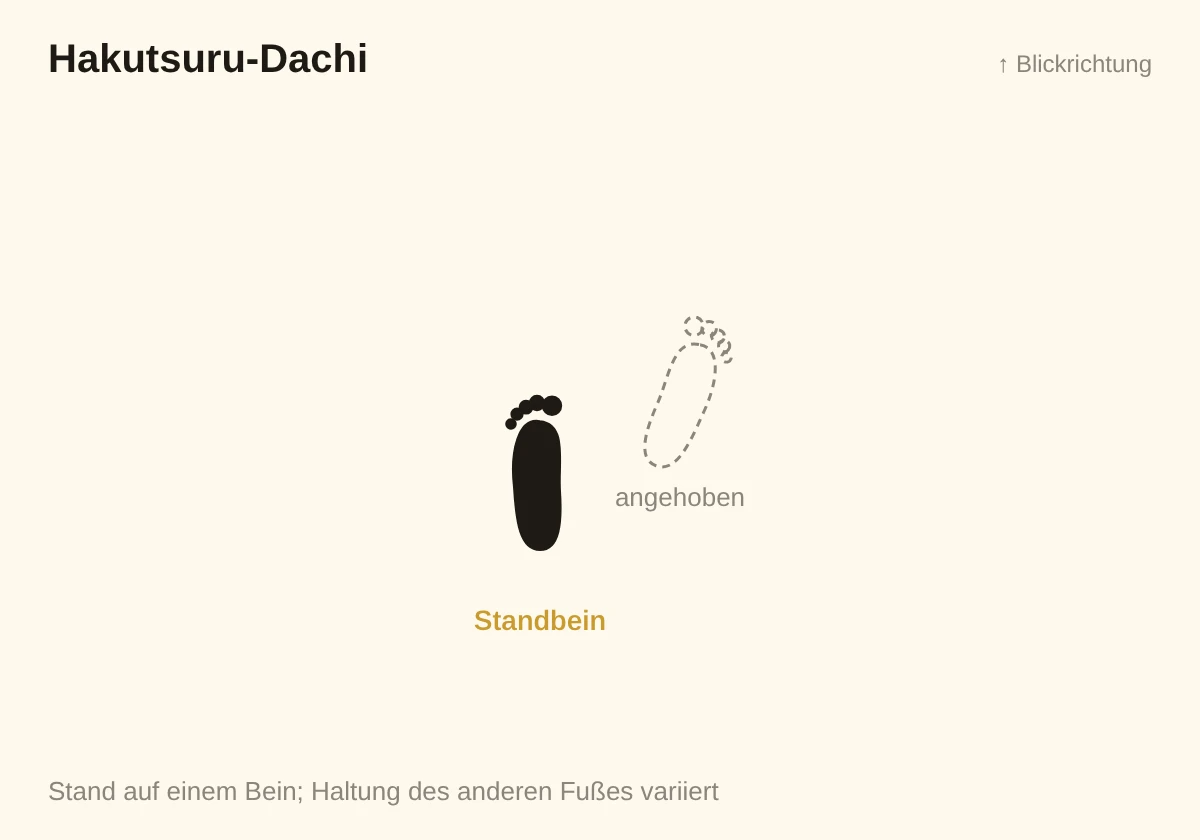
Stand on one leg. Variations are Tsuru-Dachi (heron stance) and Ippon-Ashi-Dachi (one-foot stance). These define how the other foot is held.
Other stances
- Naname Heikō-Dachi and Naname Zenkutsu-Dachi are the same stances, except that hips and feet are turned at a 45° angle.
- Kokutsu-Dachi – back stance. The reverse position of Zenkutsu-Dachi.
- Tora-Dachi – tiger stance – is only mentioned in the warm-up.
- Ryu-Dachi – dragon stance – one-legged squat with the other foot extended.
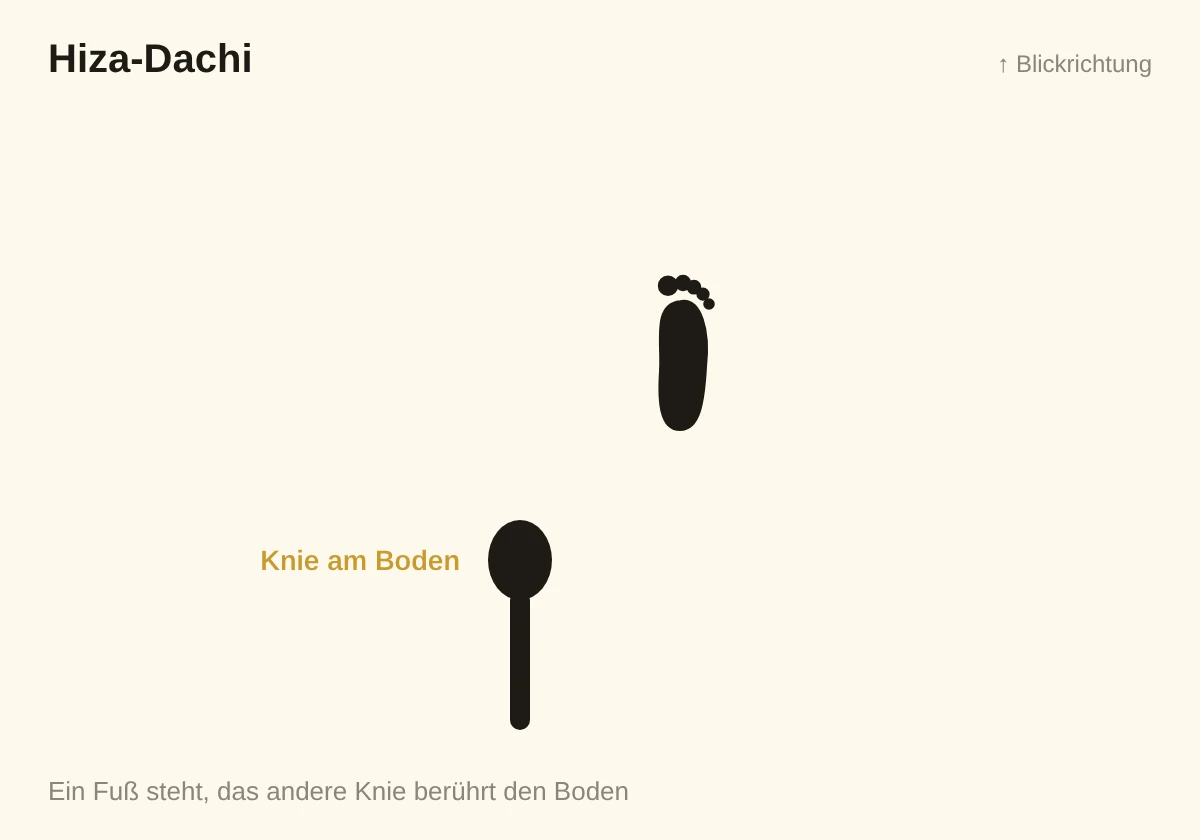
- Hiza-Dachi – stance with one knee on the floor.
← Naming of techniques · Table of contents · 3. Hand techniques →